SV Kassa — Transforming Operations for a Multi-Location Business
- Led end-to-end discovery with executive stakeholders to identify the root causes behind fragmented operational reporting
- Defined the product strategy and prioritised features for a unified, multi-location operations platform used by 80+ staff
- Reduced manual reporting effort by ~1,000 hours annually, generating an estimated $25,000+ in operational savings
The Problem
SV Motors operated multiple retail locations, with each store managing sales and inventory data independently — primarily through disconnected spreadsheets and local processes. While large volumes of operational data were being generated, there was no consistent way to consolidate or analyse it across the organisation.
As a result, leadership lacked visibility into overall business performance. The CEO could not easily compare stores, identify emerging trends, monitor inventory effectiveness, or make timely, data-informed decisions. Valuable information existed, but its fragmented nature significantly limited its strategic value.
The Opportunity
The lack of a unified view highlighted an opportunity to transform isolated operational data into a strategic asset. By centralising information from all locations, the business could move from reactive management to proactive decision-making.
A consolidated reporting solution had the potential to provide leadership with real-time visibility into sales performance, inventory levels, and cross-store trends. Beyond improving reporting efficiency, it could enable more informed decisions around stock allocation, performance management, and future growth initiatives.
Discovery
I ran discovery directly with the CEO and key stakeholders to understand the real problem. The core pain wasn't just data collection — it was comparison and visibility. Managers were doing their jobs, but leadership had no consolidated view. That insight shaped the entire product strategy: every major view needed to be designed around comparison, making it immediately obvious how one store was performing relative to another.
The Hypothesis
If leadership had access to a unified, role-based platform providing real-time operational visibility across all locations, then they would make faster and better-informed decisions, resulting in reduced reporting overhead and improved business performance.
Success Criteria
I considered the initiative successful if we achieved:
- Migration of all participating stores away from spreadsheet-based reporting
- Active adoption by 80+ operational users across all locations
- Reduce reporting effort by at least 1000 hours annually
- Positive feedback from leadership and store staff during post-launch surveys
Product Strategy
Based on discovery findings, I prioritised capabilities that directly addressed the visibility and comparison challenges identified by leadership. The strategy focused on creating a single source of truth for operational performance while ensuring that day-to-day workflows remained intuitive for store staff.
The MVP included:
- Multi-location inventory synchronisation
- Financial record tracking and reporting
- Role-based dashboards tailored to different user groups
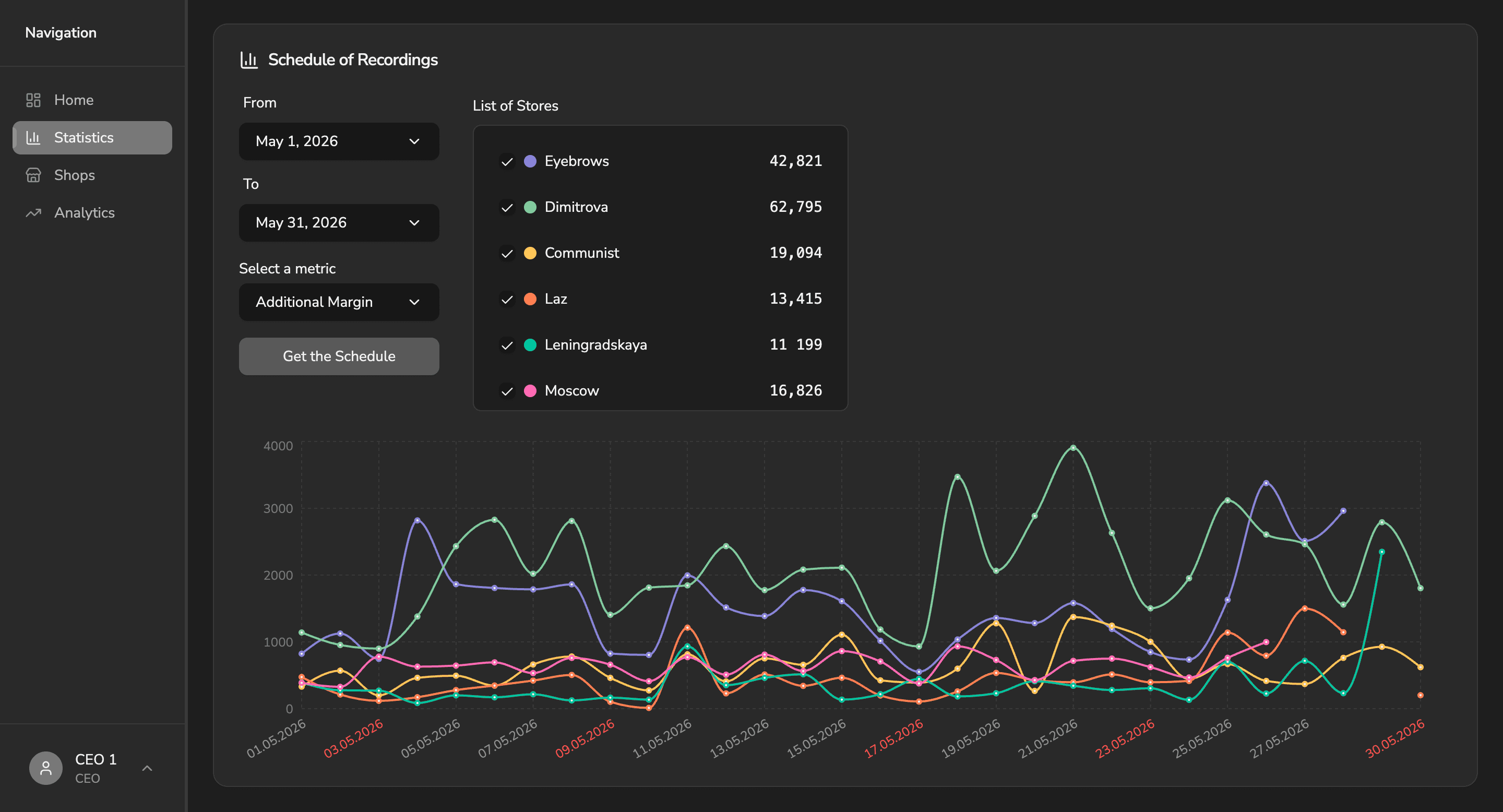
- Chart-first visualisations enabling cross-store comparison
Key Decisions
Three-tier RBAC system
I designed a three-tier Role-Based Access Control system (CEO, manager, read-only) rather than the simpler two-tier default. This reflected how the business actually worked: managers needed more access than regular staff to run their stores, but less than the CEO. Getting this right was critical for adoption.
Chart-first decision making
Rather than replicating spreadsheet workflows digitally, I prioritised visual comparison through charts and dashboards. Discovery sessions showed that leadership's primary need was identifying trends and anomalies quickly, not reviewing individual records line-by-line. This shifted the product from being an operational database into a strategic decision-support tool.
Execution & Adoption
I coordinated delivery across technical stakeholders while maintaining close collaboration with both the CEO and operational staff. Following launch, I conducted structured feedback sessions to assess adoption, identify usability issues, and uncover opportunities for improvement.
Feedback from both leadership and employees was overwhelmingly positive, and the insights collected directly informed subsequent roadmap prioritisation.
Before & After
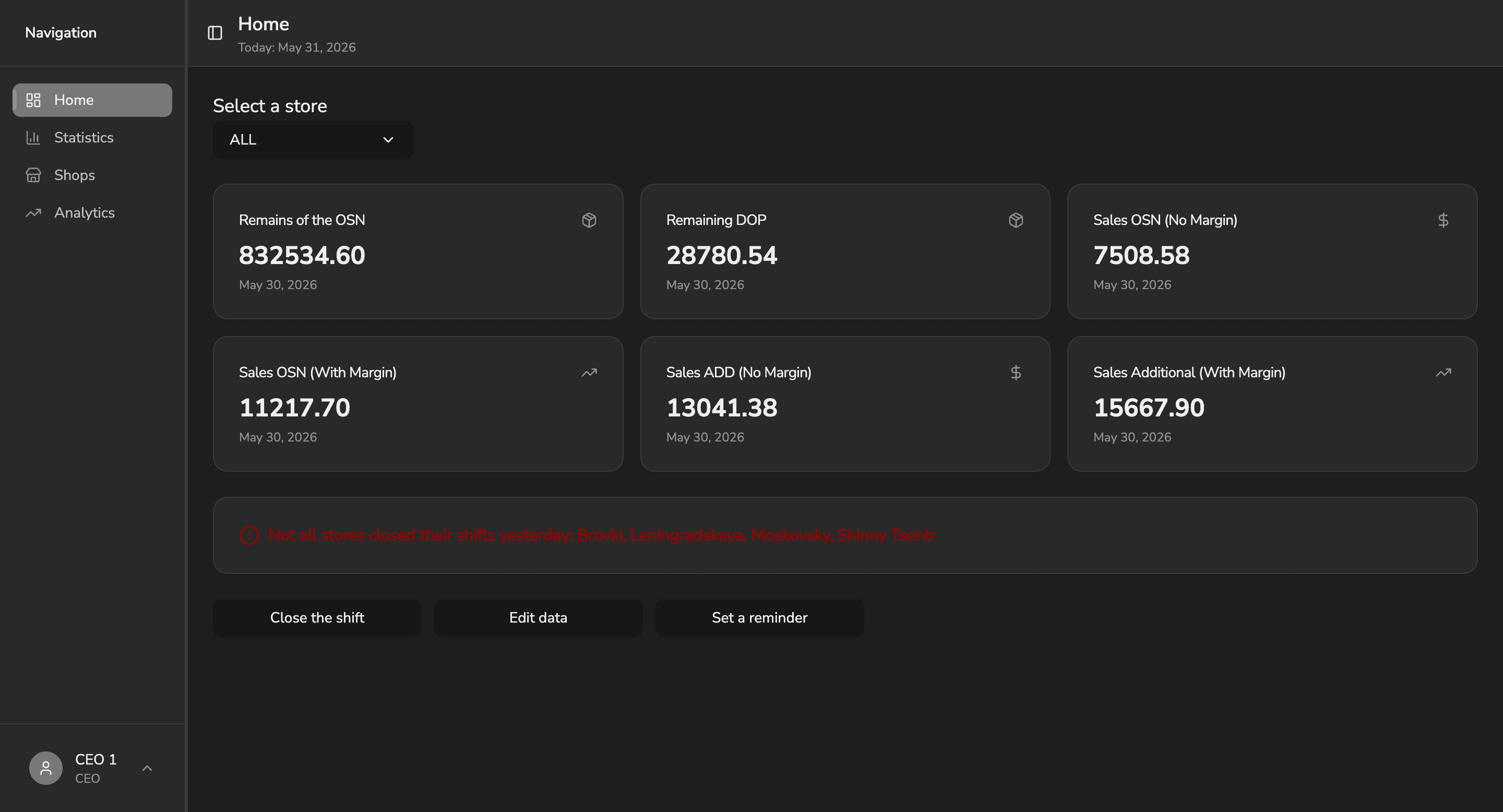
Disconnected spreadsheets across multiple locations — no unified view, manual reporting, no cross-store comparison.
SV Kassa Dashboard — role-based, multi-location, chart-first.
Outcome & Metrics
SV Kassa successfully replaced spreadsheet-based tracking for 80+ staff across multiple locations. It eliminated ~1,000 hours of manual reporting work annually. Assuming an average operational cost of $25/hour, this automation saved the company an estimated $25,000+ per year in direct labour costs alone, not including the revenue gained from reduced inventory shrinkage and faster strategic decision-making.
The initiative validated the original assumption that consolidating fragmented operational data into a unified platform would significantly improve both reporting efficiency and executive visibility.
All predefined MVP success criteria were achieved, demonstrating that a unified operational platform could deliver both measurable efficiency gains and improved executive visibility.
Lessons Learned
I would spend more time speaking directly with store managers during discovery, rather than relying primarily on executive perspectives. Because the operational tooling was ultimately built for them, their understanding of day-to-day workflows was often more accurate than the top-down view.
Earlier involvement from store managers would likely have influenced my initial prioritisation decisions and helped align the product more closely with operational realities from the outset.